
heal Running injuries
Uncover the cause, heal your pain so you can run without injury.
Choose the common running injury you want to learn more about:
meniscus problems in runners

In this episode of Running to the Castle I’m talking about what to do and what to avoid when doing strength workouts as a runner with meniscus tears.
When you’re doing strength workouts and you have meniscus tears or problems there are a few things you want to be mindful of doing:
deep bending
plant and twist movements
deep bending during a flare


That’s right! You can quickly get back to running again. Just follow the recommendations for your surgery and time-frame appropriately.
Continue reading, and I think you will be glad you did this after you discover my top recommendation, which has the best chance of making you feel great again and again without problematic pain forever!

If you had meniscus surgery but now feel like you haven’t recovered and are not where you want to be, it’s likely because your surgeon didn’t tell you about these 8 things that could be causing you problems.

Someone with a knee meniscus injury may feel pain, feel like their knee is giving way and may lock in place. The initial injury was from a non-contact twisting motion, or from repeated deep squatting for years at work. Building up good strength and flexibility can decrease the risk of injuring it. For more tips and tricks follow my page.
shin splints in runners

In this episode of Running to the Castle, Dr. Ali Marty breaks down one of the most common fears she hears from runners: that a painful week of training means they've injured themselves and need to stop completely.

In this episode of Running to the Castle you’ll learn what to do when you have foot pain keeping you from running as much as you want.

In this episode of Running to the Castle you’ll learn what to do to manage leg pain 2 weeks before the half marathon or 2 course challenge at runDisney.
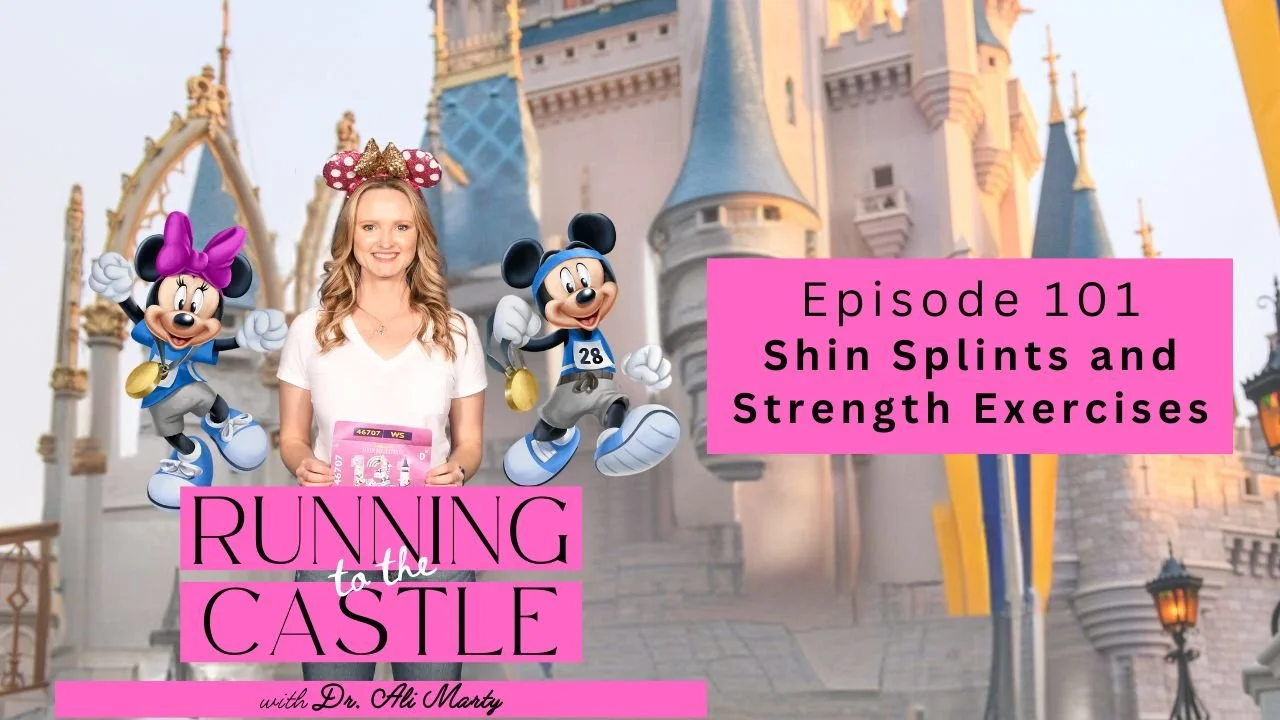
In this episode of Running to the Castle, you'll learn how to prepare for runDisney races like Chills and Thrills and Wine and Dine, and Dopey through strategic base building, strength training, and personalized pacing and differentiate between soreness and shin splints.

I am diving into what type of shoe you should wear. based on what kind of injury you have so that you can prevent further injury.
Learn how to fix your burning shin splints with simple changes.
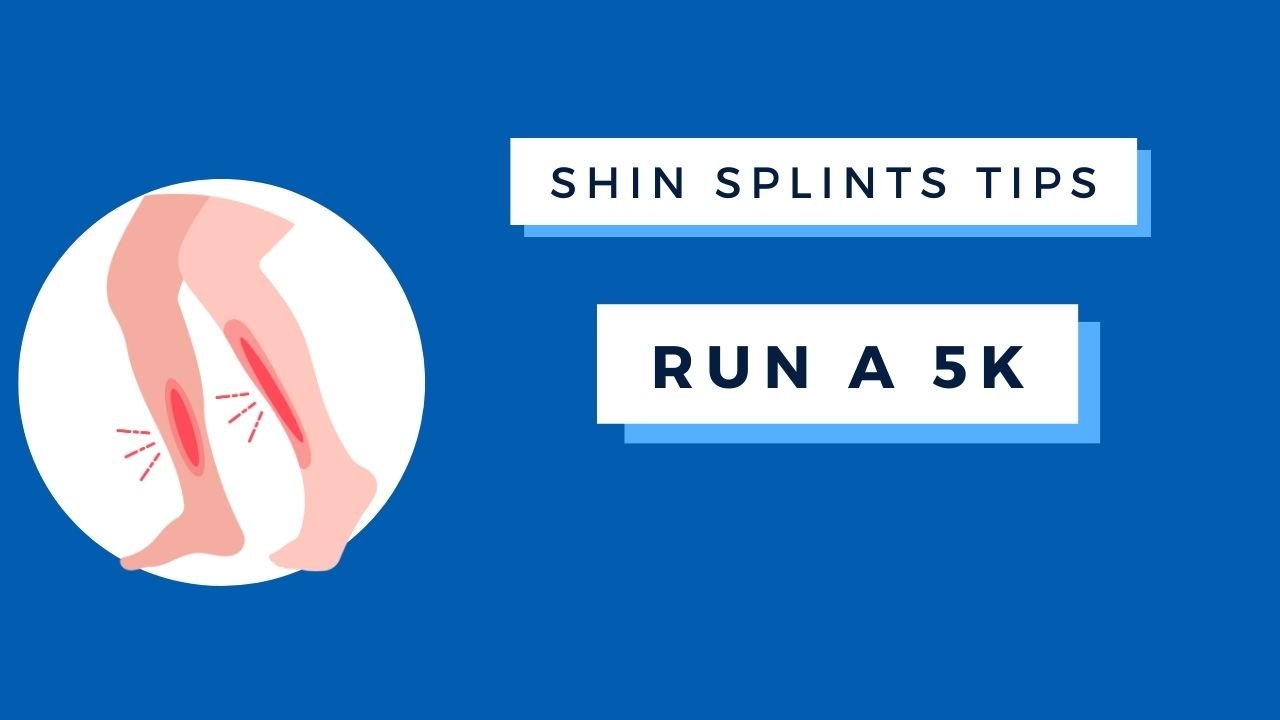
The thrill of the WDW Marathon Weekend 5k beckons, but the challenge of shin splints looms. Can you navigate this path of discomfort and still triumph in your race? The answer is a resounding yes. In this comprehensive guide, I delve into the art of training for a 5k while battling shin splints.

Shin splints can be pesky and painful and they can come back over and over again, or never go away completely in the first place. Shin splints are an overuse of the muscles in front of the shins that lift our toes off the ground. We mainly use them when we walk so we don’t trip over our shoes. In general they tend to get overworked when we add a lot more walking or activity compared to our normal routine. To recover, do active rest for 7-14 days, then work on a strength routine of the muscles of the ankle to strengthen and support the leg for when you get back to your normal routine.
In this episode of Running to the Castle, Dr. Ali Marty breaks down one of the most common fears she hears from runners: that a painful week of training means they've injured themselves and need to stop completely.

In this episode of Running to the Castle you’ll learn how to decide how to move forward with training for your race if you have hip and groin pain with running.

In this episode of Running to the Castle, you’ll learn why you can’t diagnose running pain from a Facebook post—and what you should be asking instead.
In this episode of Running to the Castle you’ll learn what to do to manage leg pain 2 weeks before the half marathon or 2 course challenge at runDisney.
Hip Pain in runners

Your hip flexors do a lot of work a lot of the time. They can be in pain from sitting too long and from doing the work to move you forward when you walk and run. To get rid of this pain: every 20 minutes stand for 20 seconds so you don’t sit so long, stretch regularly, that’s a whole body stretch routine, and strengthen other muscles besides the hip flexors to make them support the whole hips better the easiest way to do it is to walk backward and sideways at the kitchen counter until muscles are tired.
In this episode of Running to the Castle, you’ll learn why you can’t diagnose running pain from a Facebook post—and what you should be asking instead.
In this episode of Running to the Castle you’ll learn what to do when you have foot pain keeping you from running as much as you want.

In this episode of Running to the Castle you’ll learn how to get rid of plantar fasciitis pain before race day, like Princess Half Marathon Weekend.
plantar fasciitis in runners
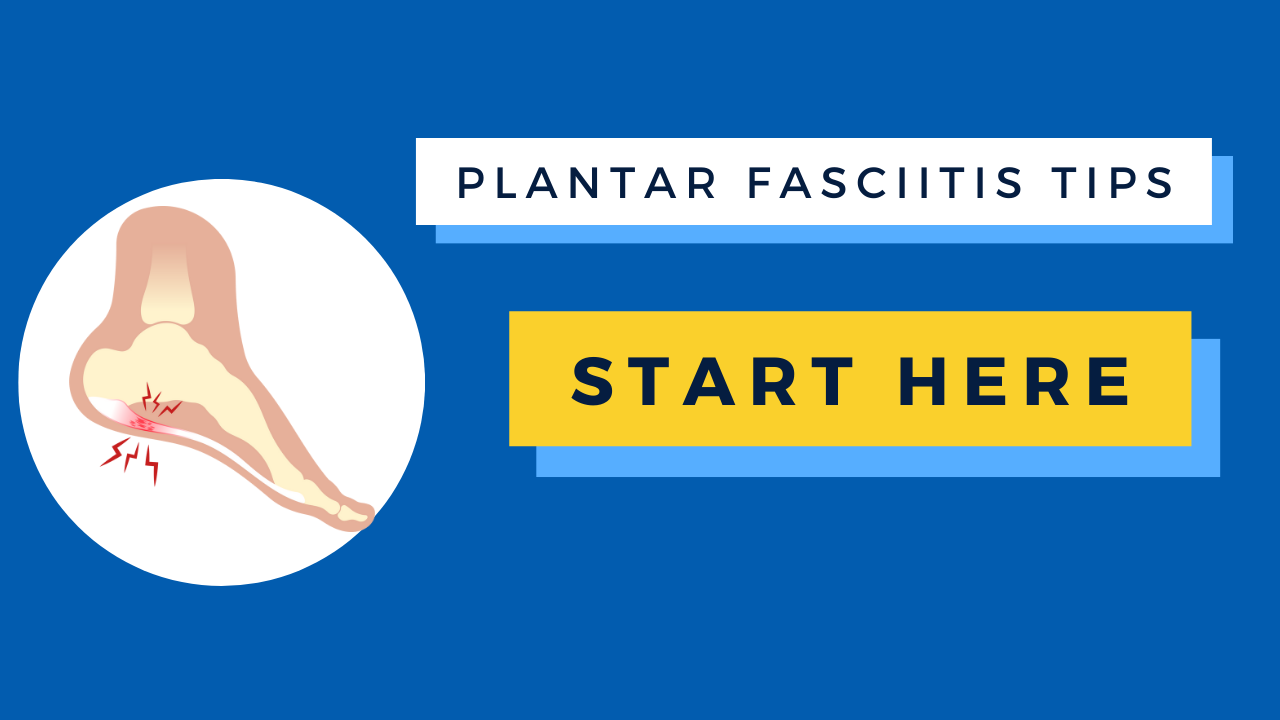
Plantar fasciitis is an injury that is very common in the world of run-walkers. This article goes over what it is, shoes, treatment and prevention of plantar fasciitis.

In this episode of Running to the Castle, you’ll learn about Achilles pain—what it feels like, why it happens, and how to both recover from it and keep it from coming back during your runDisney race training.
In this episode of Running to the Castle, you’ll learn why you can’t diagnose running pain from a Facebook post—and what you should be asking instead.
In this episode of Running to the Castle you’ll learn what to do when you have foot pain keeping you from running as much as you want.
achilles tendinitis in runners

Achilles tendinitis is an acute inflammation and pain in the achilles portion of the calf muscles. I go over what causes it, how to treat it and how to avoid it in this article.
In this episode of Running to the Castle Dr. Ali discusses what one slow runner could do to help their knee pain when ice hasn’t been working.

In this episode of Running to the Castle I’m talking about what to do and what to avoid when doing strength workouts as a runner with knee arthritis. Learn how to back off painful knees, how to load them properly to maximize your workout without flaring up your knee arthritis.
arthritis in runners
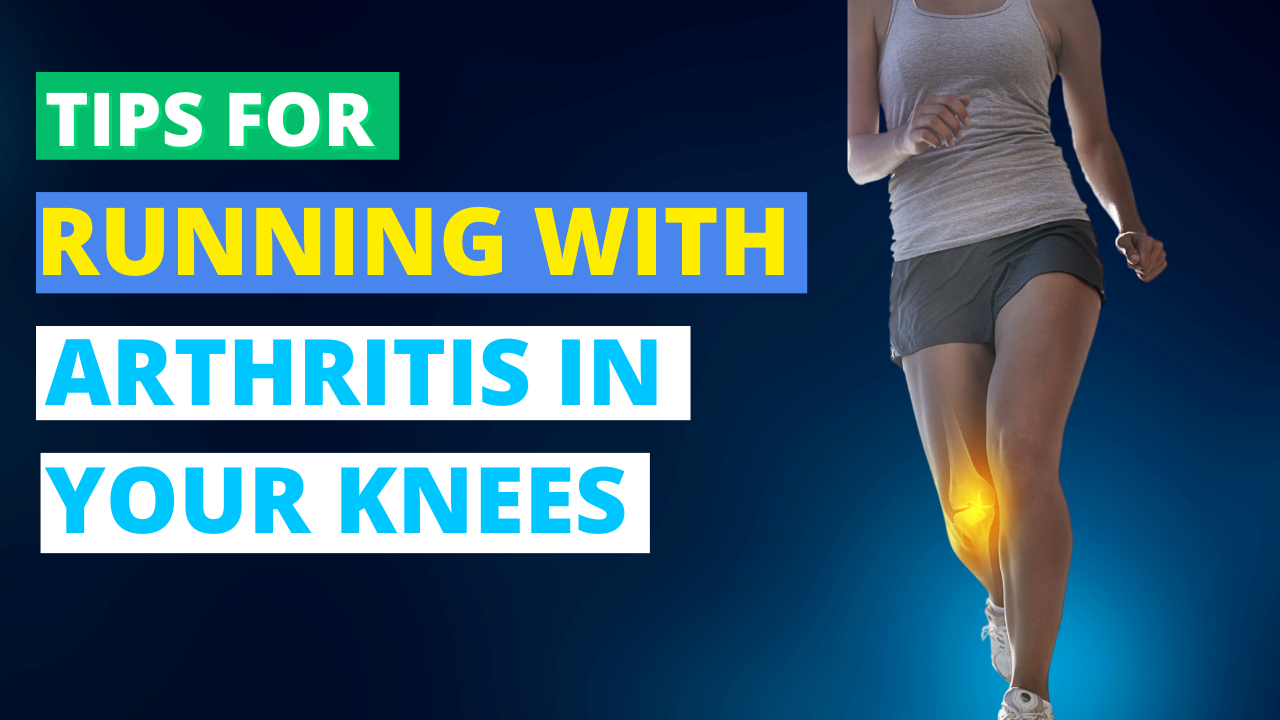
You can keep running with arthritis. And you can do it without knee pain. Arthritis is a normal part of being a human and there are ways to keep it from getting worse… and stopping running isn’t one of them. It’s all about the balance of how much stress you put on your knees and the recovery and healing you give your knees. This article gives the steps on how to balance out the stress on your knees and letting them rest, too.

Hey Runner!
You’re feeling better and trying run farther or run faster. It’s frustrating because every time you run more your knee hurts so it’s like one step forward and two steps back. Keep reading because you’ll learn the exact things to focus on now including how to run farther without your knee hurting, how to run faster without your knee hurting, what strength exercises are best for you right now, the best shoes for running, the best stretches for your knee pain, what to do after a run to decrease knee pain, and how to fuel your body for your running routine now.

Hey Runner! How frustrating, your knee pain is all over the place! The pain isn’t as bad… but it doesn’t seem to go away. Some days it feels fine and other days it really hurts. This article will tell you exactly what to do now to get rid of the knee pain and help you get past this unpredictable pain.

Do you have knee arthritis? Do you want to decrease knee arthritis pain and inflammation? Women I work with have knee arthritis and they are working with me because they want to be active but knee arthritis is getting in the way. Read more to learn the 6 things to get rid of knee arthritis pain and inflammation.

Many women want to know how to decrease their chances of getting knee arthritis because they see how bad arthritis is in their mother, aunt, friend, you name it. To decrease your chances of getting knee arthritis it takes some focus on 6 elements worked into 1 thought: how S.T.R.E.S’D are your knees? There isn’t one way to decrease your chances of getting knee arthritis. And even if you do get knee arthritis it doesn’t have to be as bad as you’ve seen. In this article you’ll learn the 6 elements to decrease your chances of getting knee arthritis and what to do to keep the pain low or have no pain with knee arthritis.
In this episode of Running to the Castle, Dr. Ali Marty breaks down one of the most common fears she hears from runners: that a painful week of training means they've injured themselves and need to stop completely.
In this episode of Running to the Castle, you’ll learn why you can’t diagnose running pain from a Facebook post—and what you should be asking instead.

In this episode of Running to the Castle you’ll learn what to do to manage IT Band Syndrome 2 weeks before race day.

In this episode of Running to the Castle I’m discussing things to be careful and mindful of when you’re doing strength exercises when you have IT Band Syndrome.
I am diving into what type of shoe you should wear. based on what kind of injury you have so that you can prevent further injury.
IT Band Syndrome in runners

IT band problems are very common… But that doesn’t mean having pain there is normal. This post is going to dive into how to prevent IT band problems so you can run without IT band injury.
stress fractures in runners

If you’re injured with a stress fracture learn how to heal it quickly and how to maintain your fitness while you can’t run.
In this episode of Running to the Castle, Dr. Ali Marty breaks down one of the most common fears she hears from runners: that a painful week of training means they've injured themselves and need to stop completely.
In this episode of Running to the Castle, Dr. Ali answers a question nearly every slow, back of the pack, or injury-prone runDisney runner has asked at some point…can you skip a run if you’re still sore?
In this episode of Running to the Castle Dr. Ali discusses what one slow runner could do to help their knee pain when ice hasn’t been working.
In this episode of Running to the Castle, Dr. Ali breaks down one of the most common questions she gets from runners: what supplements should I take for joint pain?
In this episode of Running to the Castle, you’ll learn why you can’t diagnose running pain from a Facebook post—and what you should be asking instead.

In this episode of Running to the Castle you’ll learn how to keep your body healthy if you’re a hypermobile runner.

In this episode of Running to the Castle you’ll learn how to prevent knee pain and achieve long-term running success.

In this episode of Running to the Castle you’ll learn what to do when you’re thinking you may need KT tape or knee braces to support your knee during your training.

In this episode of Running to the Castle you’ll learn if squats and lunges are the best exercises for runners with knee injuries.
In this episode of Running to the Castle you’ll learn what to do to manage leg pain 2 weeks before the half marathon or 2 course challenge at runDisney.

If you’ve ever experienced knee pain or other running injury and you’ve thought to yourself “oh I need to strength train more”, “I need to stretch more”, or something like that… more in these cases are just more, it’s not better.

In this episode of Running to the Castle I am discussing Runner’s Knee. Runner’s knee is also known as Patellofemoral pain syndrome, it’s called Runner’s knee because it’s common in runners but it’s not exclusive to runners. And it’s frustrating to runners because many of the symptoms happen NOT when you’re running.

In this episode of Running to the Castle I’m talking about what to do and what to avoid when doing strength workouts as a runner with knee arthritis. Learn how to back off painful knees, how to load them properly to maximize your workout without flaring up your knee arthritis.

Apple Fitness+ are convenient and easy to access for Apple users. Are they good for runners with knee pain? I've been a physical therapist since 2012 and I receive this workout for my clients. Listen now.
In this episode of Running to the Castle I’m discussing things to be careful and mindful of when you’re doing strength exercises when you have IT Band Syndrome.

In this episode of Running to the Castle I’m discussing things to be careful and mindful of when you’re strengthening your muscles because you have inner knee pain.

In this episode of Running to the Castle I’m discussing how to offload or take the pressure of your knees as a runner.
You’ll hear many people (your friends, coaches, doctors) tell you to strengthen to take the pressure off your knees. Does that really help? Listen to this episode to find out.

In this episode of Running to the Castle I’m discussing why your glutes are so important for your knees when you’re a runner with knee pain.

In this episode of Running to the Castle I’m answering the question: Are squats and lunges bad for my knees?
Some runners will say you need to do more squats and lunges because they’re painful, and others will say don’t do squats and lunges because they’re bad for your knees… so which is it? Are they bad for your knees? Listen to find out.

You know that if you have Runner’s Knee, IT Band Syndrome or Meniscus problems that one of the top recommendations is to strengthen your glutes to support your knees, and you know that squats are a solid way to strengthen your glutes.
But what about when your knees hurt so bad you can’t do squats? I gotchu

In this episode I’m talking about picking the right shoes for your knee problem and fueling right so you don’t bonk on a training run or race day.

How to set up your stretching and post-run recovery routine so you reduce knee pain.

How to set up your training plan to maximize your workouts so you’re ready for runDisney Marathon if you have knee problems. Listen to this episode to learn how to structure your run days and rest days to be ready for the Disney Marathon

In this episode I’m talking about managing new pain that has come on for someone in the past few weeks. The example is she went out for a run Monday and got knee pain, knee felt fine on Tuesday, so she went for a run on Wednesday and the pain came back

Learn the steps to take and what to do when your knee hurts too much to walk or run and you’re training for runDisney race.

Learn the key things to focus on to actually run without knee pain.


Learn the best time to and what to do about your runner’s knee pain so it goes away fast

Learn 5+ tactics that you can do at home to get rid of knee pain.
knee pain in runners
Training after a knee injury requires a strategic approach, one that takes your specific condition into account and tailors the training to your needs. You're not alone on this journey, and in this blog post, I’ll dive into the important aspects of training effectively while managing knee pain. Whether you're running or doing the run walk method, understanding how to navigate your training with knee pain will set you up for success.
There are many options for pain relief for your knee. So which one is right for you? Painkillers, heat treatments and exercise are just three of the many methods that can help reduce or prevent pain. Keep reading to help you choose which one is for you.

You have knee pain and you know if you want to keep running you have to do something to get rid of it. The problem is when you ask other runners what they did you get so many different answers… so what works for you now? You don’t want to try every single thing that’ll take too long… so how do you know which one will work best right now? Keep reading to find out.

If you’re a runner and have knee pain, you may have heard from your doctor that weight loss is a good thing. Your doctor (and many others) will tell you the best way to help reduce knee pain and get rid of it is by losing weight. But is that really the answer?
That’s right! You can quickly get back to running again. Just follow the recommendations for your surgery and time-frame appropriately.
Continue reading, and I think you will be glad you did this after you discover my top recommendation, which has the best chance of making you feel great again and again without problematic pain forever!
You can keep running with arthritis. And you can do it without knee pain. Arthritis is a normal part of being a human and there are ways to keep it from getting worse… and stopping running isn’t one of them. It’s all about the balance of how much stress you put on your knees and the recovery and healing you give your knees. This article gives the steps on how to balance out the stress on your knees and letting them rest, too.
Hey Runner!
You’re feeling better and trying run farther or run faster. It’s frustrating because every time you run more your knee hurts so it’s like one step forward and two steps back. Keep reading because you’ll learn the exact things to focus on now including how to run farther without your knee hurting, how to run faster without your knee hurting, what strength exercises are best for you right now, the best shoes for running, the best stretches for your knee pain, what to do after a run to decrease knee pain, and how to fuel your body for your running routine now.
Hey Runner! How frustrating, your knee pain is all over the place! The pain isn’t as bad… but it doesn’t seem to go away. Some days it feels fine and other days it really hurts. This article will tell you exactly what to do now to get rid of the knee pain and help you get past this unpredictable pain.

The top recommendations to get rid of knee pain for runners at home. You'll notice that the main focus is on recovery (or pain relief) techniques and there are still strength exercises, ways to train, stretches to do and there may be some knee braces and supplements that can help.

You want to run farther without knee pain. You need to run your long run without knee pain. Read this short post to find out exactly how to run your long run longer without knee pain.

You want to run longer each week but each time you run longer your knee hurts. In this short post you'll learn exactly how to run longer without knee pain. If you've had a knee injury and are getting back to running after a knee injury this is a must read so you prevent knee pain from coming back during running.

You want to run farther but each time you run farther your knee hurts. In this short post you’ll learned exactly how to run farther without knee pain. If you have a knee injury and want to run you need to read this post so you can run without knee pain.

You want to run longer but each time you try your knee hurts. In this short post you’ll learn exactly what went wrong and what to do to run longer each run and run multiple days a week without knee pain.

Run faster without knee pain after reading this short post. This short post includes the key to running faster without knee pain.

Runners are sick of hearing running is bad for your knees. Find out how bad running is for your knees in this post. Link to short YouTube at the top.

Does rest get rid of knee pain? Your doctor told you to rest and stop running to cure your knee pain but will that work?

Many people will tell you running ruins your knees. That’s just not true. When they say you’ll ruin your knees if you keep running say this back.
Do you have knee arthritis? Do you want to decrease knee arthritis pain and inflammation? Women I work with have knee arthritis and they are working with me because they want to be active but knee arthritis is getting in the way. Read more to learn the 6 things to get rid of knee arthritis pain and inflammation.
Many women want to know how to decrease their chances of getting knee arthritis because they see how bad arthritis is in their mother, aunt, friend, you name it. To decrease your chances of getting knee arthritis it takes some focus on 6 elements worked into 1 thought: how S.T.R.E.S’D are your knees? There isn’t one way to decrease your chances of getting knee arthritis. And even if you do get knee arthritis it doesn’t have to be as bad as you’ve seen. In this article you’ll learn the 6 elements to decrease your chances of getting knee arthritis and what to do to keep the pain low or have no pain with knee arthritis.
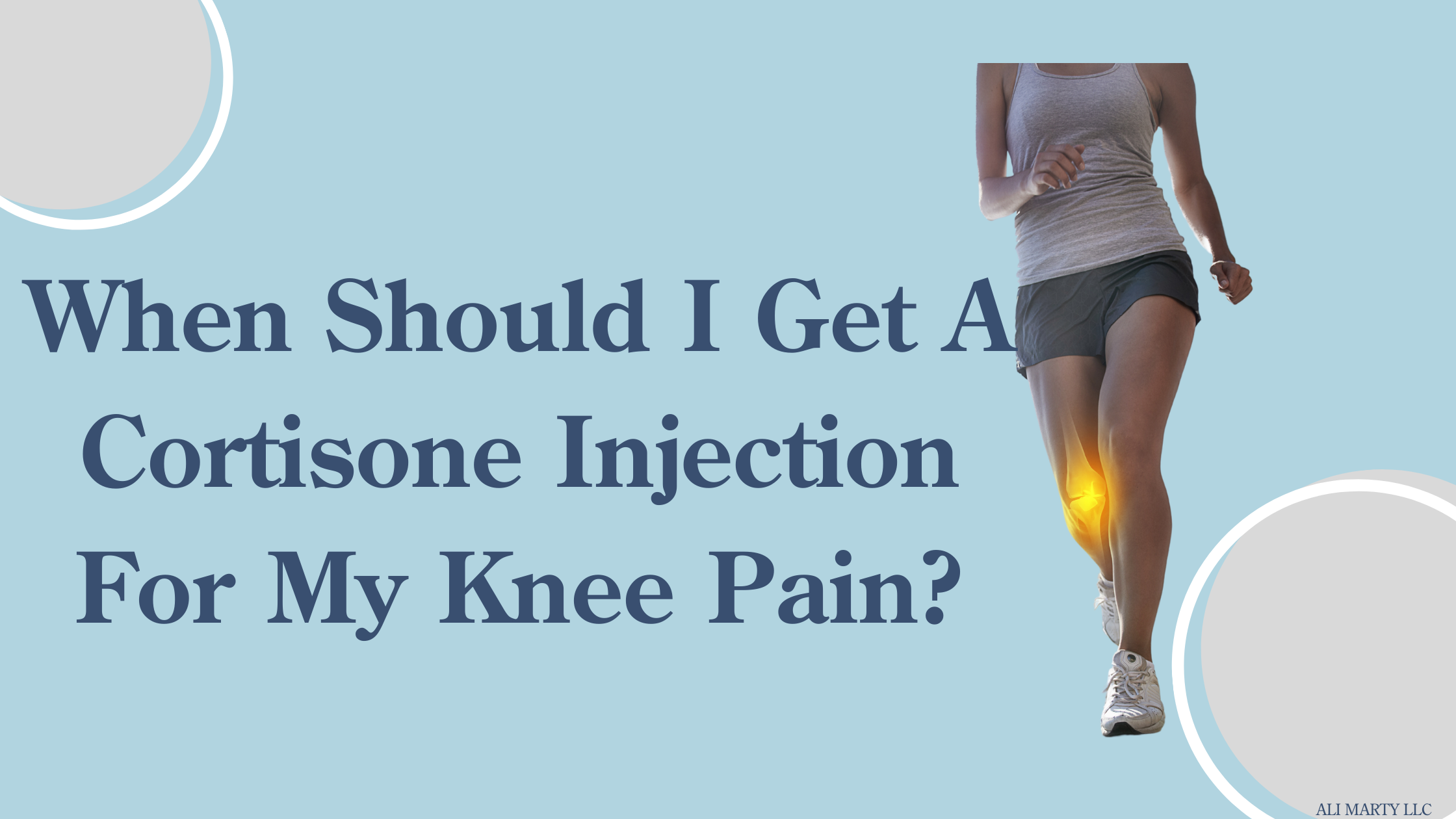
There are many ways to get rid of pain and inflammation. Cortisone definitely is anti-inflammatory… but if the pain is caused by chronic inflammation, not acute inflammation, then cortisone doesn’t work well. Read to find out when I recommend cortisone injections.

Squats are an important motion in our everyday lives. We use a squat to be able to pick up items from the floor, sit down and get up from various things in our lives like a chair at dinner, the couch, the car, and the toilet. If someone can’t do a squat because their knees hurt too much and they want to or need to squat I recommend starting with the sit to stand exercise from high level chairs like a bar stool and over the course of weeks or months progressively lower the height of the chair until the height needed is reached.

You may need a gait analysis if you are a runner who regularly does strength and stretching and recently started having knee pain without having any other reason for why the pain came on. Someone who isn’t an athlete that has longstanding knee pain that has worsened over time can do a few things at home to see how they stand and walk including check if they have knock knees or bow legs, see if they can stand on one leg an dif they can does their hip drop, when they walk do they sway their hips side to side? For more information on how to fix these problems check out the full Youtube Video.

It’s unlikely you just need to stretch your hamstring to make the pain in the back of the leg go away. It may also be that you don’t have a hamstring injury at all but instead have Sciatica or irritation at the Sciatic nerve instead. Having an injury to the hamstring would prompt a progressive strength and stretching routine to rehab the hamstring, if you didn’t have an injury it’s more likely you have Sciatica symptoms from sitting so long at work, on the couch, etc. See your local physical therapist to get a program for Sciatica or a hamstring strain. For more information follow my page.
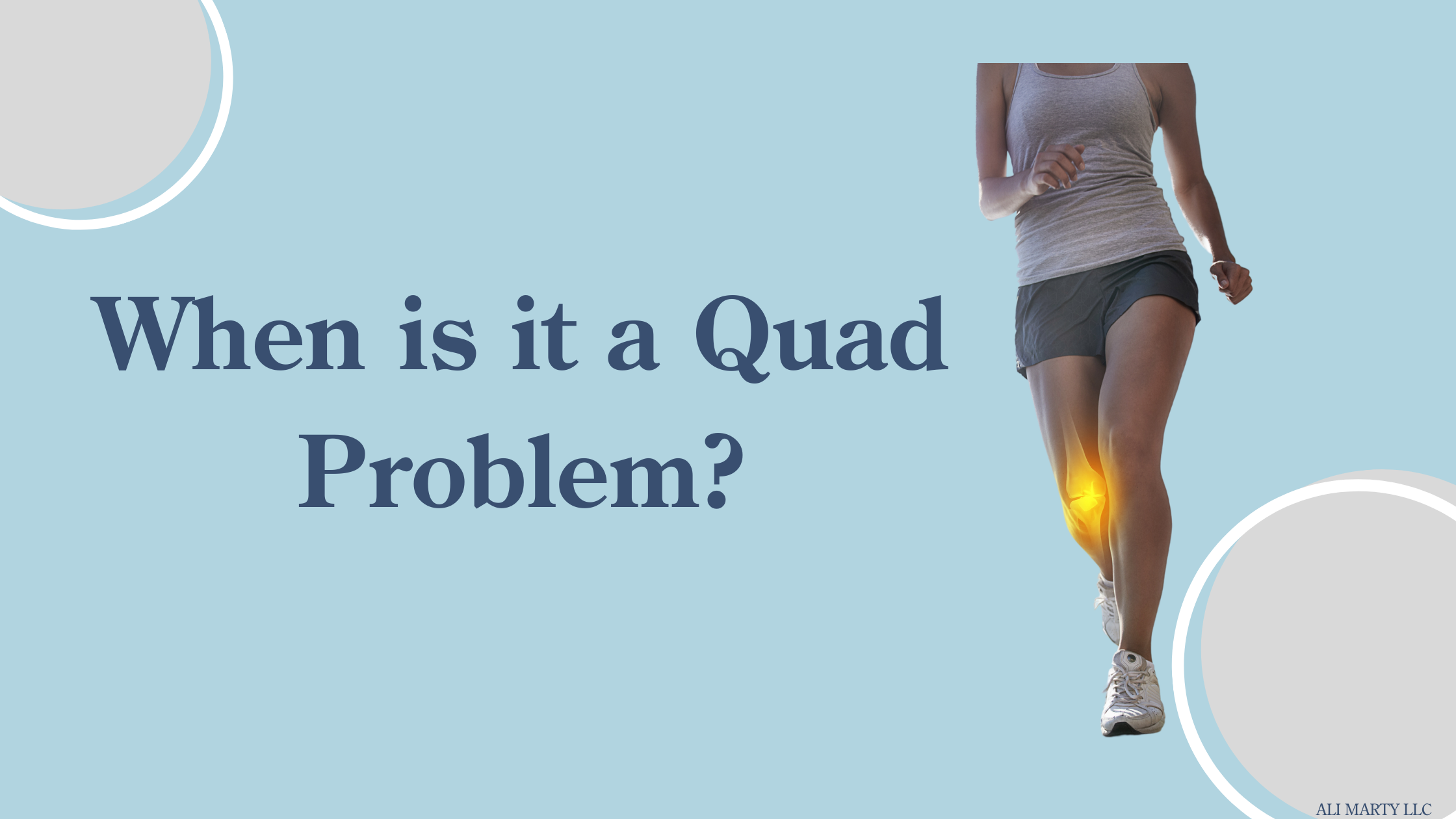
A quad strain can happen, it is more likely to happen to athletes than the non-athletic population. If you are in the general population you may have an injury to the quad tendon if you fall forward on your knees and give a quick stretch to the quad. The pain will likely be sharp at first and can remain for a while and become a more dull pain. A progressive strengthening and stretching program can rehab the quad strain.

You may have pain just below the kneecap, inferior to the kneecap, because of an imbalance in muscle strength and flexibility, partly in the quadriceps muscle as well as other muscles of the legs. When the quad contracts it tightens down the kneecap normally and if the imbalance is there it will add more pressure. My favorite treatment is to counter the pressure with my hand and massage below the knee cap.
Someone with a knee meniscus injury may feel pain, feel like their knee is giving way and may lock in place. The initial injury was from a non-contact twisting motion, or from repeated deep squatting for years at work. Building up good strength and flexibility can decrease the risk of injuring it. For more tips and tricks follow my page.

Grinding behind the kneecap, also called crepitus, is common due to arthritis wear and tear behind the kneecap. Tight quad muscles can contribute to kneecap grinding because of the pressure and tension that’s created. My favorite treatment for this grinding is cupping or a plunger to the kneecap to relieve pressure. For more tips and tricks follow along my page.

What I do when I have knee pain that limits my running: I assess the situation constantly, how does my knee feel at rest, walking, running, other movements. I always warm up, try a run and if that pain isn’t going away within 5 minutes I just continue to walk. I make sure I strength train at least 3 days a week and stretch after every workout no matter what kind of workout it is. FOr more tips and tricks follow my page.

To get better sleep with knee pain I recommend pain medication, joint/muscle rubs like Deep Blue, massage the area, use a Heating or a hot epsom salt bath, add some lavender to the bath, and sleep with your knee (really the whole leg) supported so your knee feels like it’s getting a cozy hug.

Find out if heat can help knee pain or if ice is for knee relief.
in case you’re new, let me introduce myself
Hey, how’s it goin?
I’m Dr. Ali.
Doctor of Physical Therapy. Personal Trainer. Nutrition Coach.
When I’m not reading Harry Potter, at Disney (or wishing I was), hanging with my dog & husband, or crocheting amigurumi, I’m helping runners train for their next runDisney race to cross the finish line healthy, strong and confident.
As a coach with 10+ years in the rehab space, I’m an expert in running injuries and have taken my clients all the way from barely able to run a few minutes because of an injury to being happy, motivated and running magical races.

You deserve to cross the finish line at Disney without feeling broken.
See what clients are saying
-
It’s sucks to have something( injuries) hold us back from what we love! I could have gotten on board With any of the many running coaches around, but would they have given me what I really needed? I don’t think so. I’m sure they have nice plans, good advice, and tips etc. For me, when I saw your background and your passion, I had a feeling We would make a good fit! As we all should admit..sometimes we need help with the things in life we think we already know! And that’s where you fit my needs perfectly!
Becky B
-
"I am so grateful for my experience with Dr. Ali. She was so thorough and always took time to address all of my questions. She provided me with a concise plan to recover and train for my next RunDisney event. Prior to seeing her, I worked with other physical therapists who taught me several exercises, but I did not feel like they adequately addressed my pain and my want to continue training for future races. Now working with Dr. Ali, I know how to avoid flare ups and address pain, and I have a thorough plan on how to train for my upcoming race. She has addressed all of my issues and answered every question I have had. She truly takes her time getting to know her clients and all of their ailments and uses her plethora of knowledge to answer questions and address concerns. I cannot recommend her enough! "
Rachel L

In this episode of Running to the Castle, you’ll learn why you can’t diagnose running pain from a Facebook post—and what you should be asking instead.